Capacity, Today & honest planning
KnightLeap's job isn't to make you feel productive — it's to tell you the truth about your week. Three places do that work: capacity, the Today page, and the schedule-health gauge.
Capacity that doesn't lie
When you plan, the hours you allocate are checked against real capacity — and the right denominator depends on the view:
| Where | Compares |
|---|---|
| Dashboard (one project) | This sprint's committed story hours vs. its allocated capacity |
| Overview / Portfolio | Total allocation across projects vs. the whole team's weekly hours |
Today shows your work — and only what's doable
The Today page is your execution view. It shows the stories assigned to you plus unclaimed sprint work, bucketed into Now, Next, and Done lanes. Work a teammate has claimed stays off your page.
Crucially, date-locked work (like a Saturday routine) doesn't demand hours today. When you've finished everything actionable, the project shows Done for today with the hours you put in — not an impossible target for tomorrow's tasks.
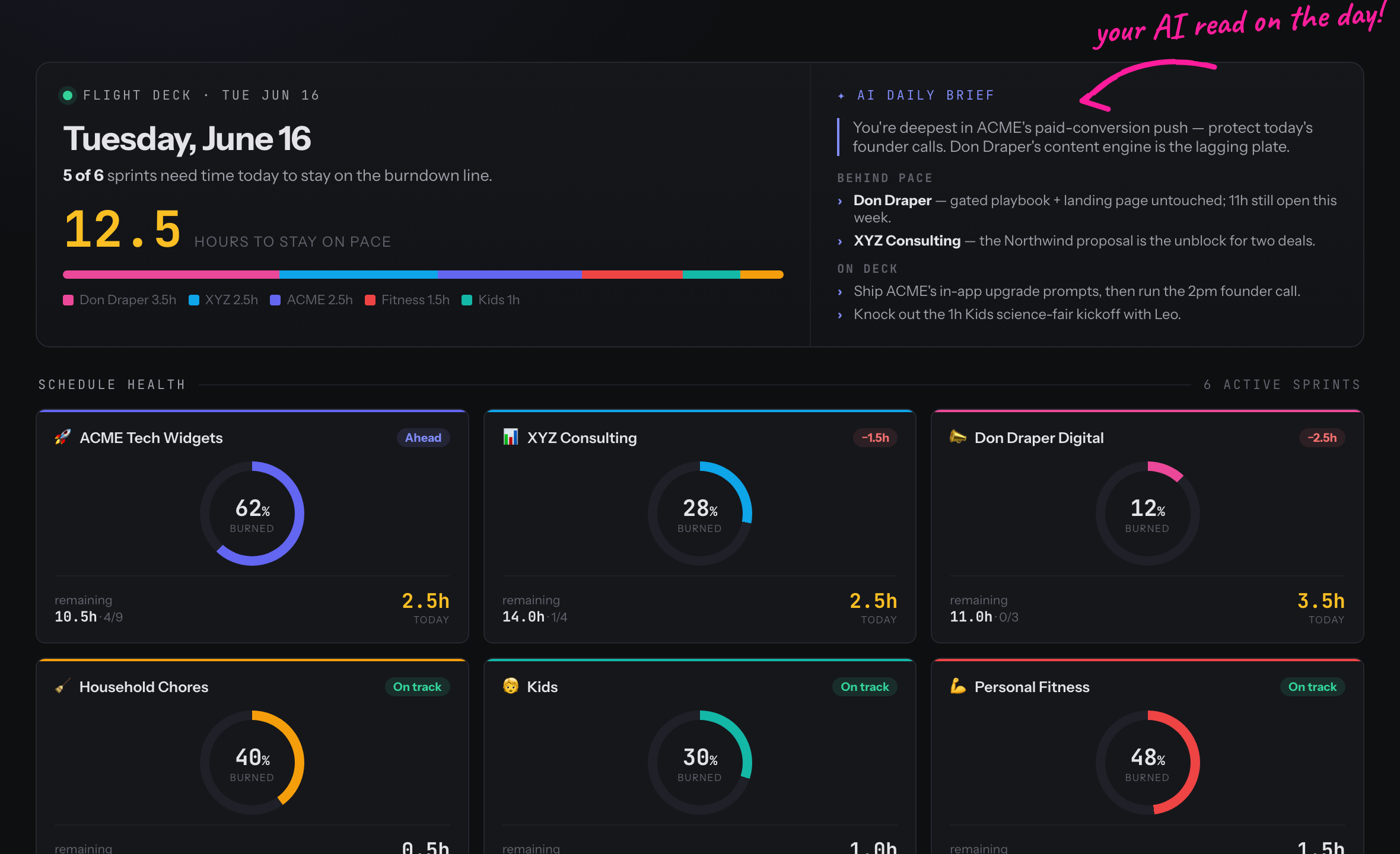
Schedule health
Each project's gauge compares where you are against an ideal burndown line, and tells you how many hours you'd need today to stay on track — capped at what's actually possible today. Green when you're on pace or done, a clear number when you're behind.
Putting it together
Plan honestly on Monday (capacity tells you if you've overcommitted), execute from the Today page and Calendar during the week, and let the Dashboard's burndown keep you honest about pace. Next Monday, your velocity and last week's review mean you plan from facts — not vibes.